Esme secretly heals Hero Society members
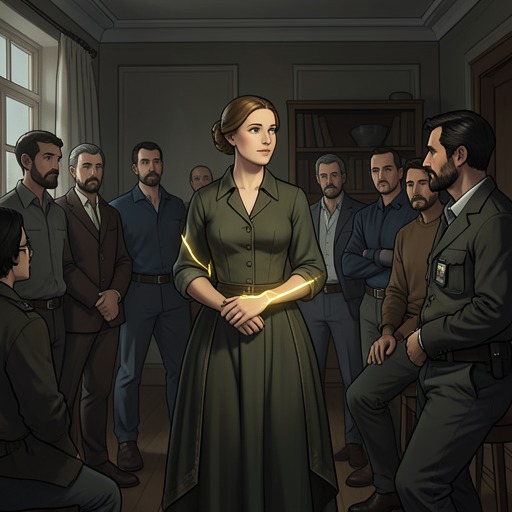
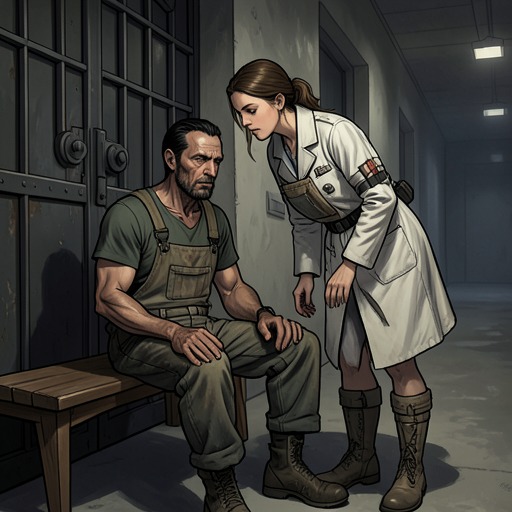
The Night CleanerEsme secretly heals Charles and Leon, two Hero Society members brought to the hospital on the brink of death. Her intervention saves them, and in Charles’s case also heals his spine so that he can use his legs again. She keeps the work unacknowledged within the Society: helping is reason enough, even when it may cost her years of life.
The hospital debt
Months before healing Charles and Leon, Esme had been threatened by a man who woke after being brought unconscious to the hospital. Rose and Draco stopped him from killing her. Esme understood that she owed them a debt, although she did not say so aloud. That earlier rescue provides a personal context for her later aid to members of the Society, but the text does not present her healing as a request or an exchange arranged with Rose or Draco.
Healing Charles and Leon
Charles and Leon arrive at the hospital close to death, and Esme uses her gift to heal both of them. For Charles, the healing has a lasting, practical consequence beyond survival: his spine is restored, allowing him to use his legs again. His subsequent progress through therapy makes the result visible in ordinary life; he says that the people treating him do not know how his legs recovered, and he is pleased to be completing his final appointment. Esme responds with a congratulatory hug, then reflects that moments like this make her proud of her gift.
Her work as a nurse places this secret intervention alongside more familiar forms of care. In the emergency department, she works amid patients and their treatment; in the maternity ward, she helps deliver two babies and supports three women in postpartum rooms, returning to ease new parents’ worries. Those duties are not presented as uses of her supernatural ability, but they show the practical caregiving that surrounds it. The restored mobility of a patient leaving therapy gives her a particular reason to value what her gift can accomplish.
Secrecy and the price of care
Esme believes that, as far as she can tell, no one in the Hero Society knows she healed Charles and Leon. She does not want recognition for doing what she can, and the possibility that the intervention shortened her life does not make her regret it: she says she would do it again. Her choice therefore joins secrecy to a personal ethic of care, rather than to a pursuit of status or public credit.
That ethic is shaped by a harsher experience. When her twin brother Eli is dying of leukemia, Esme begs to heal him, but he refuses because he would rather have less time with her than live without her. They have faced the question repeatedly, and she knows that healing him without permission would damage their bond. His death leaves her with the painful contradiction of possessing a power that can save others while being unable to use it for someone she loves most. Against that loss, her successful treatment of Charles and Leon is a source of pride, but not a sign that healing is cost-free.
A gift that becomes sacrifice
The limits of Esme’s healing become stark again when Dorian is near death. She removes the metal bar from his chest and pours her remaining life into healing him; as her gold lifeline fades, she recognizes that he needs everything she has and gives it to him. Rose warns her that she is giving too much, but Esme continues. The scene makes explicit the danger that had shadowed her earlier, less visible treatments of Charles and Leon: the gift can restore another person while diminishing the healer’s own life.
Together, these acts distinguish Esme’s recurring care from a simple power to repair bodies. She heals patients whose recovery gives them back capacities they had lost, keeps her intervention for Charles and Leon private, and repeatedly accepts a personal cost. Her pride in the gift and her awareness of its danger remain inseparable.